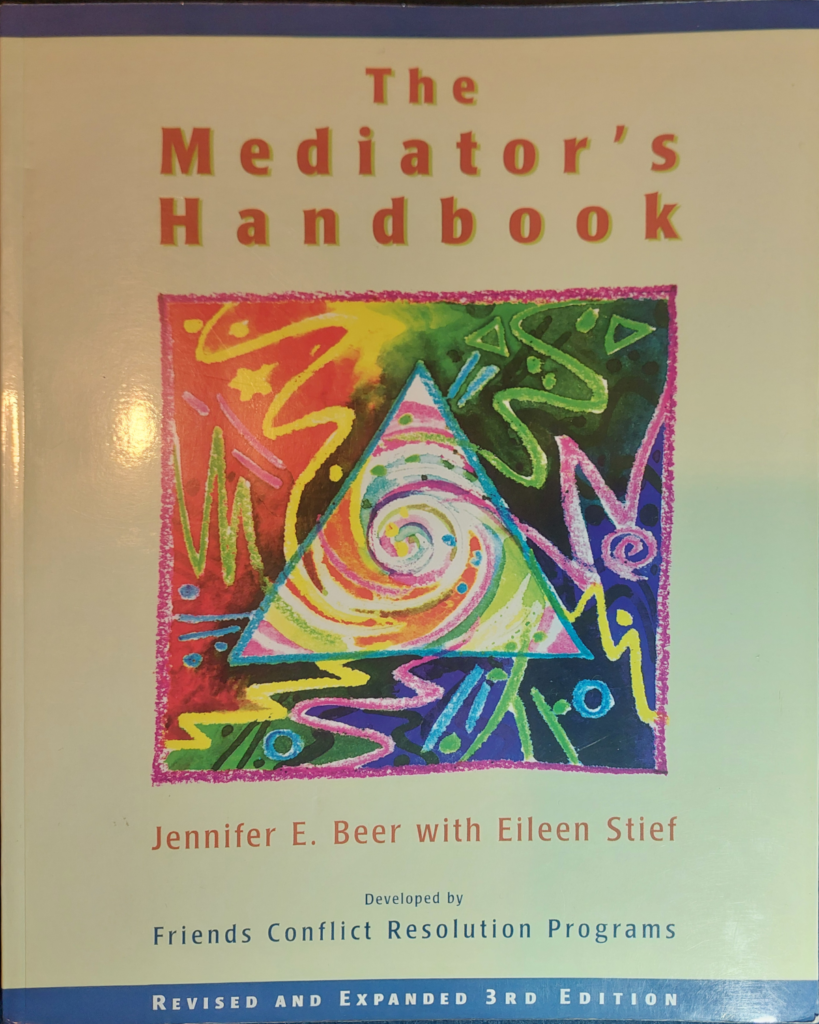
I picked this book up at a used-book store on a whim. It seemed like something directly relevant to my interests, particularly my hope to be a force for peace and understanding. Having read through it, I’ve picked up a few pieces of wisdom here and there, along with clarifying a misunderstanding I had.
When I pictured mediation, I pictured something more hands on. Both sides explain their issues and the person leading it draws up a plan to resolve it, telling them what to do. As I’ve learned, that would probably more fall under “arbitration”, something like a judge without a courtroom.
Mediation is different. Mediation is bringing the parties together in an environment conducive to discussion and having them hash out a plan together. The mediator is less a leader and more a facilitator. The role carries with it something of a detachment. If a final agreement is reached, it might even be one the mediator thinks unfair. But their opinion isn’t what matters.
Actually, when considering the mediator’s role, the phrase “project manager” comes to mind. I find significant overlap with best practices in project management. Both involve drawing up a plan, asking questions about how realistic it is, and enumerating the possible blockers that might derail or even ruin it.
Regarding that “wisdom” I mentioned, I did like a simple yet profound observation the book makes in the 6th chapter: “Most people cannot take in other perspectives until they feel that their own story has been heard, and that their own needs and grievances have been recognized.” That very much jives with my observations of human nature and the world at large. It is incredibly hard to get people to care about the needs of others when their own needs aren’t been met.
The role of a mediator is not an easy one. There’s definitely a tightrope to be walked. It says that one must show empathy to the parties, but without treating what they say as facts. You have to have empathy, but also avoid any appearance of impartiality. That’s definitely going to be challenging, particularly if one party is clearly wrong and/or lying. The book is very clear that people will lie to you.1
It also discusses dealing with people getting emotional. People who cry, people who shout, all sorts of drama. I suspect those situations are ones where the mediator will have to do a lot of improvising to try to calm things down.
Late in the book, I found it interesting how it starts covering the same sort of material cognitive therapy deals in. It discusses destructive thought patterns one might fall into, referring to them as “interpretations”. For instance, a participant might be making unwarranted, incorrect assumptions about what the other party thinks. This is called a “Mind-Read”.
So, would I recommend this book? As something to pick up and read? No, not really. That’s not the kind of book this is. I suspect this book is best paired up with a real course and hands-on experience. But I could definitely see such a course built around this book giving somebody a good foundation for mediating people’s conflicts.
- This brings us to one thing it said in section 6.1 that I have to take exception to. It says to accept that they are giving you THEIR truth. It says that their lies and delusions can come from some inner place where they’re true. I must respectfully disagree. Delusions (misunderstandings) are one thing, but if a person states something they know to be false, that is simply lying. ↩︎