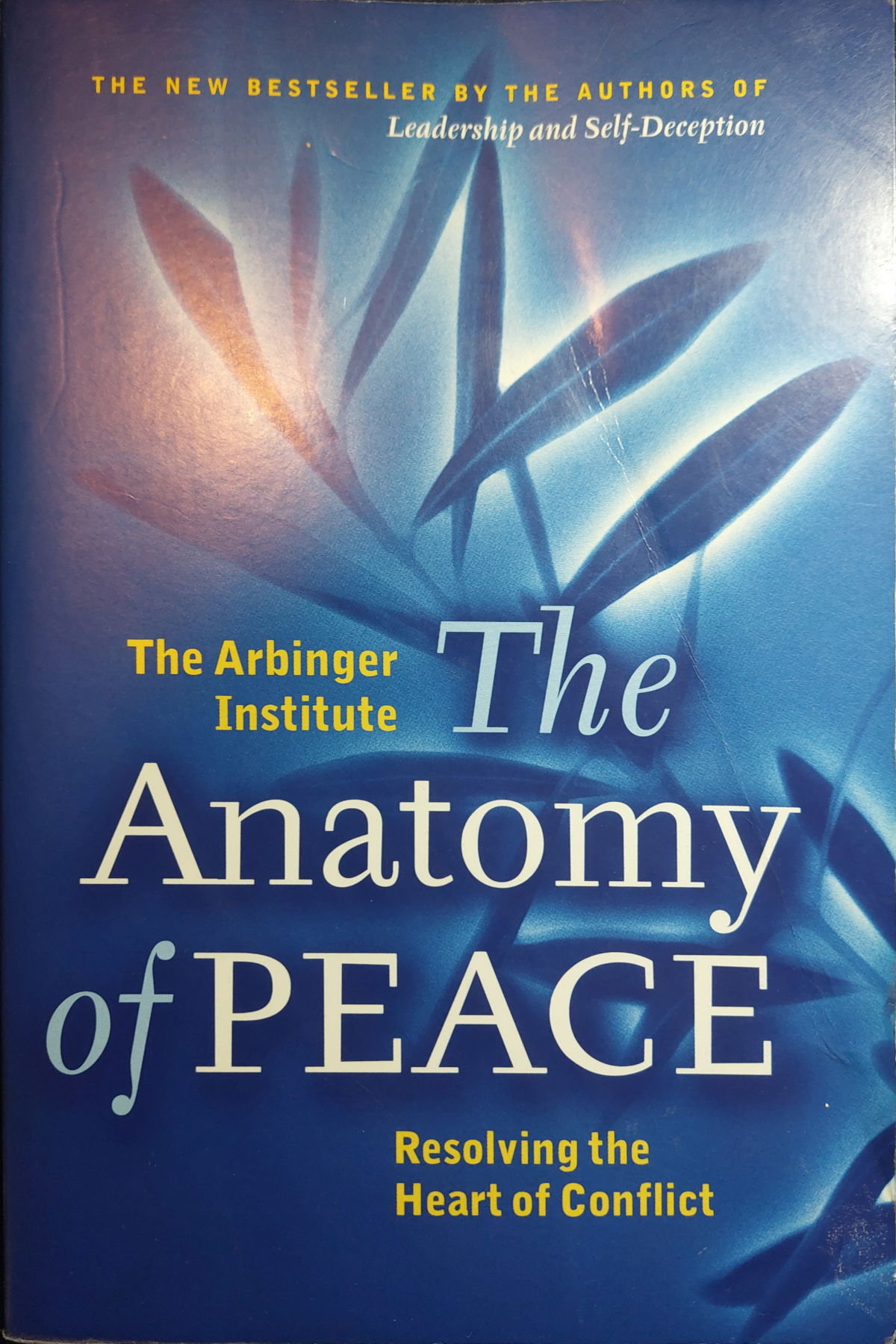
I went into this book knowing nothing about it. As I was putting together my 2025 reading lineup, it happened to catch my eye at a used books store. And having read it, I can say that I’m very fortunate it did. There is a wealth of interesting material in here about the psychology of conflict and peace.
Genre-wise, this wasn’t something I was expecting. A fictional narrative to communicate a philosophy. I think it counts as philosophical fiction. You don’t see that a lot, but stories are a wonderfully effective tool for making a point.
The narrative centers around the words and thoughts of a man named Lou. It’s not a stretch to say that his life is falling apart all around him. His son is on a bad path, his company is on the verge of collapse, and his marriage isn’t in the greatest shape either. He’s honestly not a terribly likable person, but his personal growth is part of the point.
It’s a pretty good book, and well worth a read, but some of the concepts stuck out more than others in terms of value, and I’d like to highlight some of them.
Chapter 5 is fascinating, taking us through a spat between a husband and wife, with a play-by-play of the psychology going on behind the scenes. The point it drives home, at least for me, is how easily we allow ourselves to get trapped in cycles of pettiness. We can become obsessed with arguing and having the last word and perpetuate the silliest of conflicts.
Chapters 10 through 14 talk about the mental processes of “going to war”, and “betraying ourselves”. When we know the right thing to do, but we decide to ignore that and do otherwise, we betray ourselves. This puts us in a state where we need justification. We need to twist reality to somehow make ourselves feel correct. I find myself oddly reminded of the Christian doctrine of Original Sin, where we effectively inhabit a twisted universe because we have betrayed our God-given nature.
In particular, Chapter 12 raises an interesting point. It argues that, the surer you are that you are correct, the more likelihood you have of being wrong. And if you think about it, it makes sense. The surer you are of being 100% right, the less likely you are to consider the evidence, particularly evidence that points out your mistakes.
Chapter 17 had a great message. I’d sum it up as how we can earn people’s empathy and respect by how we treat them.
It reminded me of a passage from Sun Tzu’s The Art of War, Section 10, Part 25: “Regard your soldiers as your children, and they will follow you into the deepest valleys; look on them as your own beloved sons, and they will stand by you even unto death.” This is then supported in the commentary by Tu Mu where he talks of good commanders refusing luxuries and enduring all the same hardships as their men. That’s true leadership, right there!
The most core idea of the book, upon which everything else rests, is humanization. Everything starts from seeing others as human beings, not as objects or tools or obstacles. We need to approach our dealings with other people with empathy, with that basic human respect.
Failing to have that empathy comes with very real peril. This isn’t a particularly political book, but there’s plenty of priceless political wisdom. There’s a great line in Chapter 22: “If a country doesn’t clearly and persuasively communicate the reasons for actions it is taking in the world community, it invites resistance to those efforts.”
I’d argue there’s no need to even look at action abroad. When governments take domestic actions and don’t bother to explain what they’re doing and why, they’re simply begging for resentment and failure.
I think everyone aspiring to political office should read this book and take its lessons to heart. When you start thinking of the people as “voters” more than as “human beings”, you lose sight of what they need from you. From that can only come poor policy, resentment, and defeat.